Products & Services — Polished Concrete

Polished concrete floors.

Polished concrete floors London: high-performance, low maintenance, architect-led results.

London Polished Concrete installs true polished concrete floors for residential and commercial interiors — colour-hardened, salt & pepper, and fully exposed aggregate. Clean lines, seamless movement, and the durability you'd expect from a slab built to last.

Why polished concrete

Built to be lived on.

Durable & long-lasting

One of the toughest interior finishes available. It performs in high-traffic homes, retail, offices and hospitality — resisting wear, impact and everyday abrasion when correctly specified and maintained.

Beautifully low maintenance

Designed to be lived on. No tiles to crack, no grout to stain, and no regular re-coating routine. Simple cleaning (water or pH-neutral cleaner) keeps it looking sharp.

Underfloor-heating compatible

Works brilliantly with underfloor heating. The slab stores heat and releases it evenly, making it ideal for open-plan layouts, extensions and modern ground floors.

Tailored to your space

Finish is everything. We help you choose the right concrete build-up and the right look — from colour-hardened architectural tones to salt & pepper exposure to fully exposed aggregate.

Choose your finish

Three finishes, one specialist.

Below are the three polished concrete floors we install. The right option depends on your aesthetic, programme, budget, and the depth available for your floor.

Colour-Hardened

The classic colour-hardened floor — a dry-shake colour hardener broadcast onto fresh concrete and power-trowelled in. It produces a dense, abrasion-resistant wearing surface and a consistent architectural tone.

Best for
  • A controlled, uniform colour
  • High-traffic areas needing a tougher surface
  • New-builds, extensions & commercial interiors
What it looks like
  • Minimal aggregate visibility
  • Smooth, refined surface with subtle movement
  • Sealed and protected for daily practicality

Salt & Pepper

A concrete slab mechanically ground and polished to reveal a light, fine aggregate exposure — commonly called salt & pepper polished concrete.

Best for
  • A softer, more natural concrete look
  • Residential & design-led commercial floors
  • A "true concrete" aesthetic without heavy reveal
What it looks like
  • Fine flecks of aggregate across the surface
  • Clean and modern, with natural tonal variation
  • Choice of sheen — from matte/honed to higher polish

Exposed Aggregate

The most visually expressive finish. The slab is ground further to reveal more of the stone structure — a fully exposed aggregate look, often compared to terrazzo but with a distinctly concrete character.

Best for
  • Statement floors in retail, hospitality & receptions
  • Premium homes wanting pattern, depth & movement
  • Projects that can accommodate extra grinding stages
What it looks like
  • High aggregate visibility & visual texture
  • A premium, design-forward finish
  • Excellent long-term durability when sealed
How we install

We manage the floor as a system.

We manage the floor as a system — not just a finish. Depending on the option chosen, the process includes new slab installation (typically around 100mm where specified and designed), reinforcement coordination, pouring, power-trowel finishing, controlled curing, and then the appropriate grinding/polishing sequence.

For salt & pepper and exposed aggregate finishes, we use a multi-stage mechanical grinding and polishing process with industrial diamond tooling. Where required, we repair imperfections, densify the surface with chemical hardeners, and polish to the specified sheen level. Finally, we apply a commercial-grade stain guard/sealer and burnish the surface to deliver a hard-wearing, easy-to-maintain result.

Tip — programme matters. Polished concrete success comes from getting the pour, curing, joints, levels, protection and follow-on trades managed properly — we'll advise you on the practicalities at enquiry stage.
Where polished concrete works best

From homes to warehouses.

Modern residential interiors & open-plan kitchens Retail units, shops, showrooms & galleries Commercial offices & workspaces Industrial floors & converted warehouses Hospitality — restaurants, bars & hotels
Colours

Choose your tone.

Use the chart to choose your colour-hardened (dry-shake) tone — from Parliament Stone and Marylebone Cream to Richmond Steel, Hoxton Flint and Hampstead Grey.

Please note: colour samples are representative. Final colour can vary due to cement, aggregates, site conditions, finishing technique, curing and lighting.
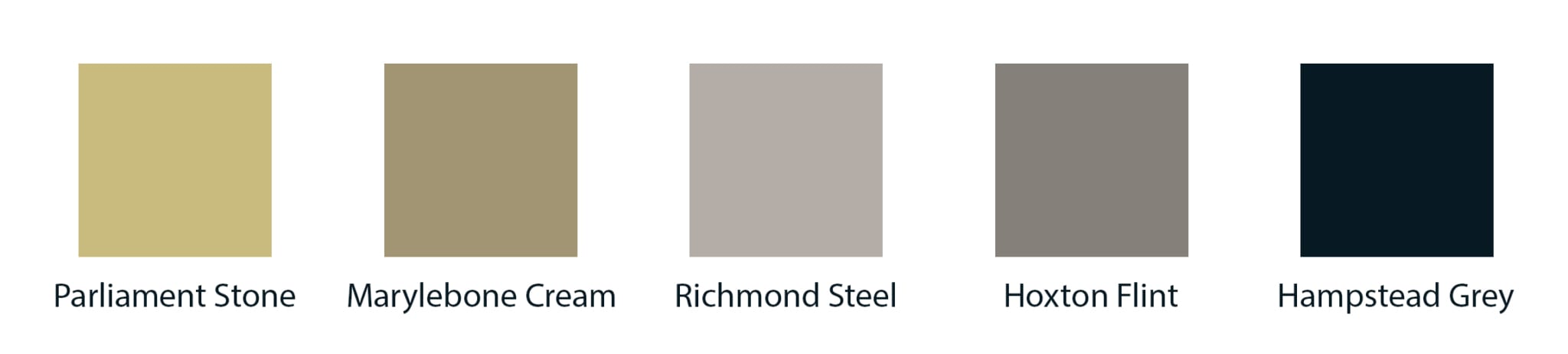
LPC colour-hardened colour chart
FAQs

Polished concrete, answered.

The most common questions we're asked about polished concrete. Need technical advice for a specific project? Speak to our team.

General — what it is

What is polished concrete, and how is it different from other concrete floors?
Polished concrete is a decorative concrete floor that has been mechanically ground, refined and sealed to produce a durable, seamless surface. The final appearance is created either through a colour-hardened surface, or by grinding and polishing the concrete slab to reveal varying levels of aggregate. The result is a long-lasting floor with excellent wear resistance, minimal maintenance requirements and a clean, contemporary aesthetic.
What's the difference between an LPC Hardcrete Microcement floor and a polished concrete floor?
Both are seamless, design-led finishes, but they differ in construction method, programme and intent. A polished concrete floor forms part of the structural concrete layer — created through a colour-hardened (dry-shake) finish on fresh concrete, or by grinding and polishing a slab to reveal aggregate. It offers depth, mass and a material-led aesthetic that celebrates the concrete itself. An LPC Hardcrete Microcement floor is a thin, cement-based system applied over an existing, prepared substrate — a seamless concrete-look finish without a new structural slab, well suited to refurbishments, tighter programmes, or where build-up height must be kept to a minimum. The right choice depends on whether a new slab is being installed or retained, available build-up depth, programme and curing timelines, and the desired visual character. We advise on both options at design stage.
What types of polished concrete floors do you install?
Three main types: (1) Colour-hardened (dry-shake) polished concrete — a dry-shake colour hardener applied to fresh concrete and power-trowelled to form a dense, coloured wearing surface; (2) Salt & pepper polished concrete — a lightly ground and polished finish that reveals fine aggregate; (3) Fully exposed aggregate polished concrete — a deeper grind that exposes more of the stone structure, creating a bolder, terrazzo-like appearance. We help clients select the most appropriate system for their project.
What's the difference between colour-hardened and exposed aggregate finishes?
The difference lies in how the surface is formed and what is visible. Colour-hardened polished concrete relies on a dry shake applied to the surface of freshly poured concrete, creating a consistent colour and a very dense, abrasion-resistant top layer, with little to no visible aggregate. Exposed aggregate polished concrete is achieved by mechanically grinding the cured slab to reveal the natural aggregates within the mix — the deeper the grind, the more aggregate is visible, resulting in greater texture and variation.
What does "salt and pepper" polished concrete mean?
"Salt and pepper" refers to a light aggregate exposure created during the grinding process. Small flecks of stone become visible across the surface, giving the floor subtle texture without the bold patterning of a fully exposed aggregate finish. This finish is popular in high-end residential and commercial spaces where a natural concrete look is desired without strong visual contrast.

Technical performance

How durable is polished concrete in residential and commercial settings?
Polished concrete is extremely durable when correctly specified and installed. It performs well in both residential and commercial environments, including high-traffic areas such as retail units, offices and hospitality spaces. The densification and polishing process strengthens the surface, improving abrasion resistance and long-term performance. With appropriate maintenance, polished concrete floors can last for decades.
Is polished concrete slippery?
Despite its smooth appearance, polished concrete is not inherently slippery. Slip resistance depends on the surface finish, level of polish and the environment it is used in. In dry conditions, polished concrete performs very well. Where required, slip resistance can be enhanced through finish selection and surface treatments, in line with guidance published by the UK Health and Safety Executive (HSE).
How do joints, cracks and movement affect polished concrete floors?
All concrete moves and will crack in a controlled or uncontrolled manner. Joints are a necessary part of concrete floor design and are used to manage shrinkage and movement. Cracks can occur despite best practice, and in polished concrete they may remain visible as part of the natural character of the floor. We advise on joint layout, crack risk and realistic expectations at design stage to ensure the finished floor performs as intended.

Installation & programme

Do you install new concrete slabs, or only polish existing concrete?
We install new concrete slabs and also work with existing concrete floors, depending on the project requirements. For new-builds and extensions, we often manage the slab installation as part of the polished concrete system. On refurbishment projects, we assess the existing concrete to determine whether it is suitable for grinding and polishing.
How thick is a polished concrete floor, and what build-up is required?
Where a new slab is required, polished concrete floors are typically installed at around 100mm thickness, subject to structural design, reinforcement and substrate conditions. Build-ups vary depending on insulation, underfloor heating, structural requirements and finish specification. We work closely with clients, architects and engineers to confirm the correct build-up for each project.
How long does it take to install a polished concrete floor?
Programme length depends on the chosen finish and whether a new slab is being installed. New slabs require time for preparation, pouring, curing and controlled drying before grinding and polishing can begin. Exposed aggregate finishes generally take longer due to the additional grinding stages required. We provide clear programme guidance during the quotation stage so expectations are managed from the outset.

Suitability & applications

Can polished concrete be used with underfloor heating?
Yes. Polished concrete works extremely well with underfloor heating systems. The concrete slab acts as a thermal mass, absorbing heat and releasing it evenly across the space. Correct coordination during installation is essential, particularly with pipe layout, curing times and commissioning of the heating system.
Where is polished concrete best suited?
Polished concrete is suitable for a wide range of environments, including residential homes and extensions, retail units and showrooms, offices and commercial interiors, hospitality spaces such as restaurants and hotels, and industrial and light industrial settings. The specific finish and detailing should always be matched to the intended use.

Finish, appearance & maintenance

How do I choose between colour-hardened, salt & pepper, and exposed aggregate?
The choice depends on your aesthetic preference, performance requirements, and programme constraints. Colour-hardened finishes offer consistency and a dense wearing surface. Salt & pepper finishes provide subtle texture and a natural concrete look. Fully exposed aggregate finishes create a more expressive, statement floor. We guide clients through this decision based on real-world outcomes, not just samples.
How do you maintain and clean a polished concrete floor?
Polished concrete floors are low maintenance. Routine cleaning typically involves sweeping or vacuuming, followed by damp mopping with a pH-neutral cleaner. No waxing or frequent re-coating is required. Periodic professional maintenance may be recommended in high-traffic commercial environments to preserve appearance and performance.
Start a project

Let's talk about your project.

Whether you're a homeowner, architect, interior designer or main contractor — we'll help you select the right polished concrete option and deliver it properly, with clear expectations on finish, joints, programme and maintenance.

Request a quote or call 020 7100 3887