
Why London’s Leading Interior Architects Specify Polished Concrete and Microcement in 2026

Walk into any high-end London renovation in 2026 — from a Shoreditch warehouse conversion to a Kensington townhouse refurbishment — and there’s a strong chance you’ll find polished concrete or microcement underfoot.

London interior architects are increasingly specifying polished concrete and microcement for high-end residential and commercial projects across the capital.

What was once associated with industrial buildings and galleries has become a preferred specification for London’s leading interior architects, designers, and developers. And this isn’t a passing trend. It reflects a deeper shift in architectural thinking — towards materials that prioritise longevity, authenticity, sustainability, and timeless design over short-lived fashion.

At London Polished Concrete, we work closely with architects and interior designers across London on residential, commercial, and hospitality projects. We see first-hand why polished concrete floors and microcement finishes are being specified again and again — and why they’re increasingly considered a design standard rather than a stylistic choice.
Why Architects Are Specifying Polished Concrete and Microcement

Contemporary architecture has moved decisively towards material honesty — allowing materials to express their inherent qualities rather than disguising them beneath surface finishes.

Polished concrete and microcement embody this approach. Unlike tiles, which rely on grout lines, or engineered finishes that mask their substrate, cement-based surfaces are integral to the architecture itself. They feel considered, intentional, and permanent — not applied as an afterthought.

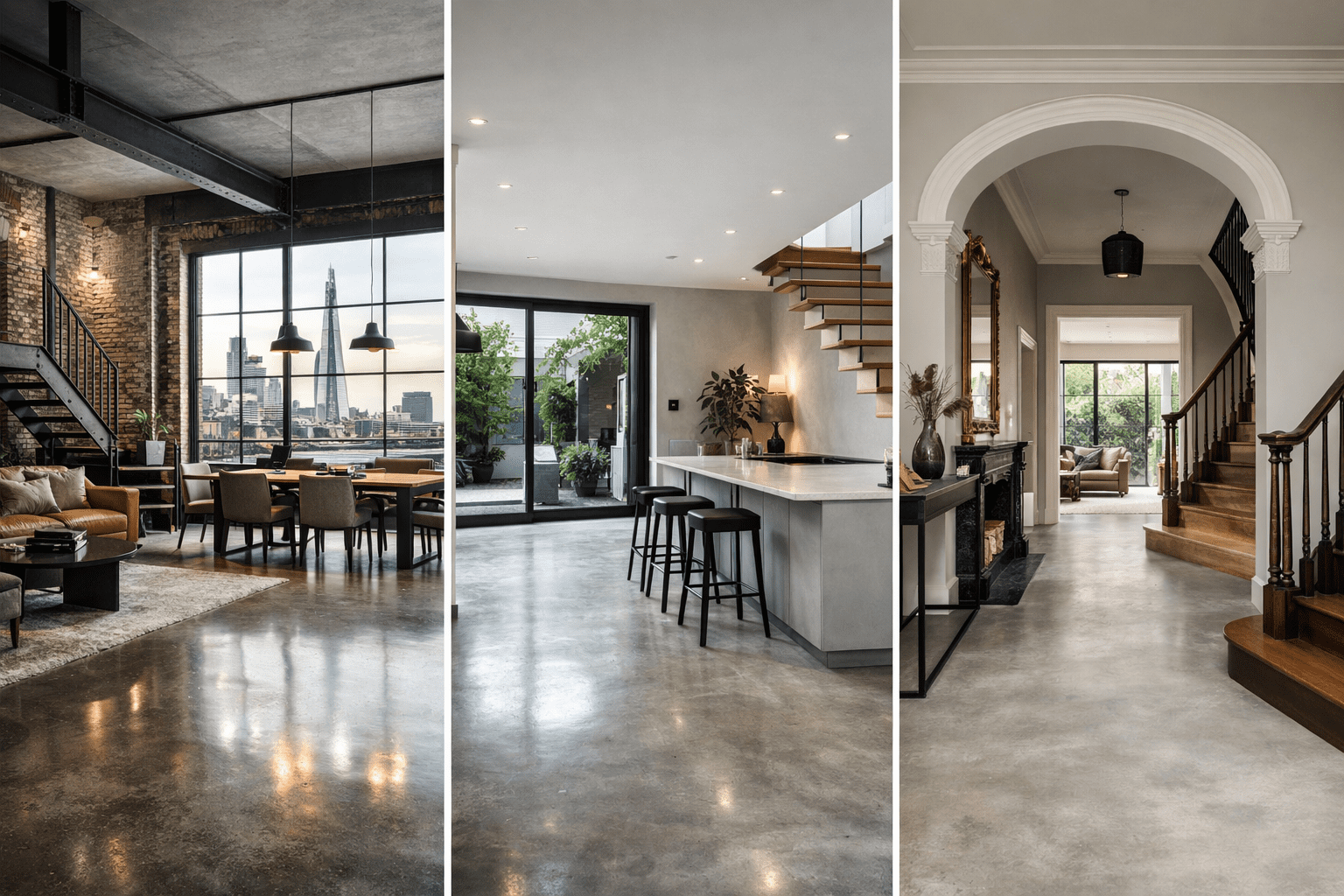
This resonates strongly in London, where many projects involve exposed structural elements: steel beams, brickwork, concrete frames. In these contexts, polished concrete complements the architecture rather than competing with it.

Architects frequently specify these finishes to create a quiet backdrop that allows form, light, and proportion to lead — particularly in Victorian and industrial conversions where old and new must coexist without pastiche.

Read our other posts!

Polished Concrete & Microcement vs Premium Flooring Finishes

How Much Does Polished Concrete Cost in London?

Polished Concrete Floors London – Transform Your Space with LPC

Seamless Surfaces for London’s Spatial Constraints

London properties often come with challenges: tighter footprints, restricted ceiling heights, and complex layouts driven by planning constraints. In these environments, the visual continuity of a floor becomes critically important.

Polished concrete and microcement offer a major advantage: seamlessness.

By eliminating grout lines and visual breaks, these finishes create uninterrupted planes that make spaces feel larger, calmer, and more cohesive. This is especially valuable in open-plan layouts, now standard across contemporary London homes and workplaces.

Polished concrete’s light-reflective qualities enhance this effect further, helping to maximise daylight penetration — an increasingly important consideration as architects prioritise energy efficiency and natural light optimisation.

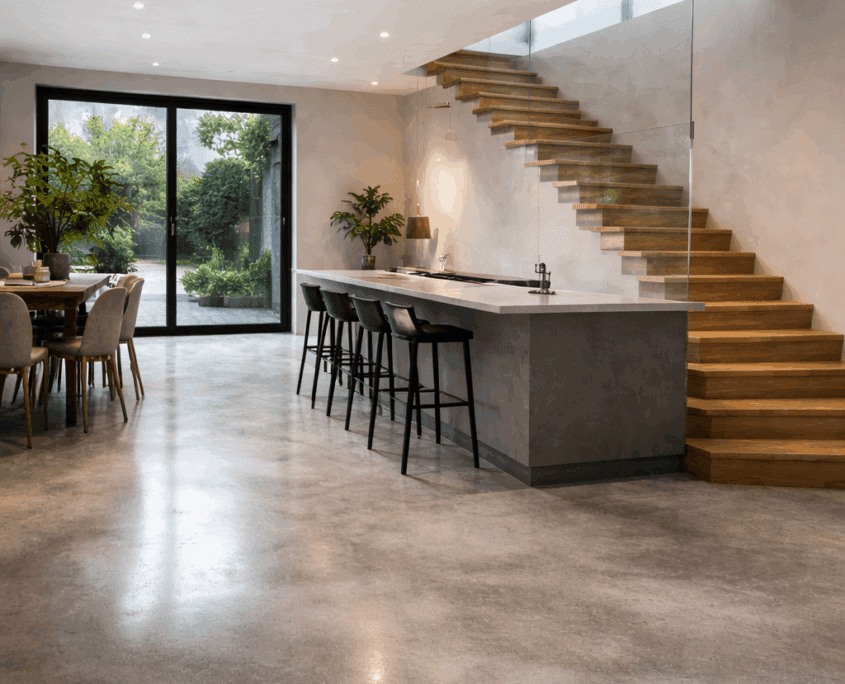
On many LPC projects, architects specify polished concrete specifically to unify multi-use floor plans and create visual continuity across kitchens, living spaces, circulation zones, and commercial interiors.

Sustainability That Aligns with 2026 Design Values

Sustainability is no longer optional in London architecture. Planning requirements, BREEAM targets, and client expectations all demand materials with strong environmental credentials.

Polished concrete and microcement perform exceptionally well in this regard.

Longevity and Lifecycle Performance

A professionally installed polished concrete floor can last 30+ years with minimal maintenance. Fewer replacements mean reduced material extraction, lower manufacturing impact, and less waste — a clear advantage over finishes that require renewal every decade.

Efficient Material Use

Where the structural slab is used as the finished floor, polished concrete eliminates the need for additional screeds and coverings. Microcement, applied at just 2–3mm, delivers a finished surface with minimal material input — ideal for refurbishment projects.

Healthy Interiors

Modern cement-based systems use low-VOC, water-based sealers, contributing to excellent indoor air quality — increasingly important in residential, education, healthcare, and workplace environments.

Thermal Mass and Energy Efficiency

Polished concrete’s thermal mass makes it ideal for underfloor heating systems, now standard in many London projects. Heat is distributed evenly and retained efficiently, improving comfort and reducing energy demand.

Adaptability Across London’s Diverse Building Stock

Few materials adapt as successfully across London’s architectural range as polished concrete and microcement.

Period Properties

In Georgian and Victorian conversions, polished concrete provides a contemporary counterpoint to original features without competing with them. Architects often favour it for its ability to highlight cornicing, fireplaces, and detailing through contrast rather than imitation.

Industrial and Warehouse Conversions

In areas such as Clerkenwell, Shoreditch, and Bermondsey, polished concrete reinforces the authenticity of industrial buildings. It doesn’t imitate concrete — it is concrete, refined and elevated.

Contemporary New Builds

In modern residential and commercial developments, the clean lines and neutral palette of polished concrete and microcement align naturally with large-format glazing, open planning, and minimalist detailing.

Commercial and Hospitality Spaces

Restaurants, hotels, offices, and retail environments increasingly specify cement-based finishes for their durability, ease of cleaning, and visual consistency under heavy use — all without compromising aesthetics.

Technical Performance Architects Rely On

Beyond aesthetics, these materials deliver the performance architects demand.

Durability

Polished concrete is among the most hard-wearing flooring systems available, resisting abrasion, impact, and heavy foot traffic. Microcement, while thinner, offers excellent durability when properly specified and sealed for residential and light commercial use.

Building Systems Integration

Both systems integrate seamlessly with underfloor heating, complex service layouts, and tight build-ups. Microcement’s minimal thickness is particularly valuable in refurbishments where floor heights cannot be altered.

Wet Area Performance

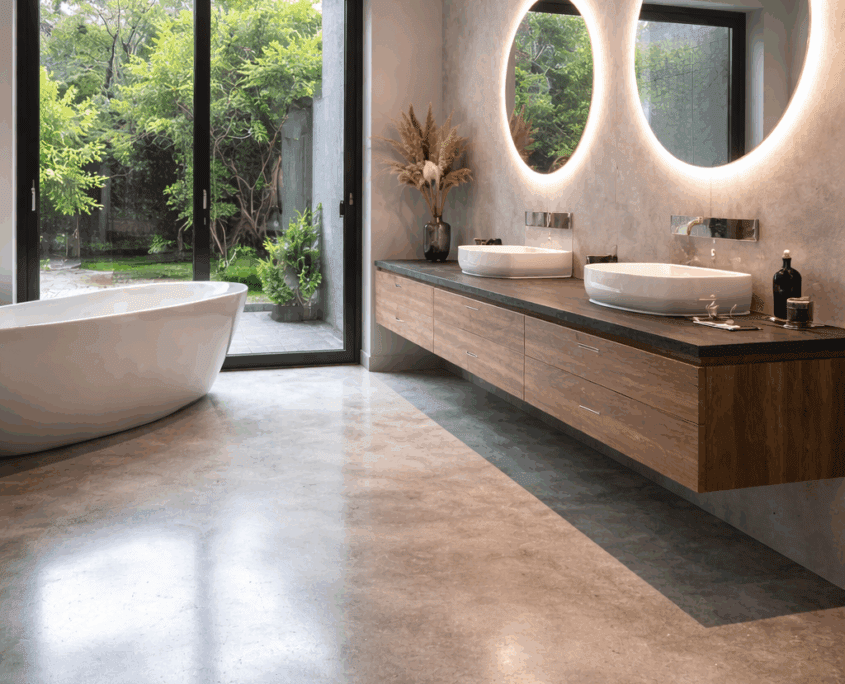
When professionally sealed, polished concrete and microcement perform exceptionally well in kitchens, bathrooms, wet rooms, and hospitality environments — eliminating grout-related hygiene issues common with tiled finishes.

Practical Advantages on Live London Projects

Architects specify these materials not just for design reasons, but because they solve practical challenges on real London sites.

  • Programme efficiency: Polished concrete combines structure and finish into one trade. Microcement avoids demolition in refurbishments.

  • Low maintenance: No grout, no waxing, no refinishing schedules.

  • Proven reliability: Cement-based systems handle London’s building stock and ground conditions when correctly detailed and installed.


Design Flexibility Within a Cohesive Material Language

Polished concrete offers multiple finish options — from salt-and-pepper exposure to full aggregate terrazzo-style finishes — while microcement allows near-unlimited colour and texture control.

Architects value this flexibility because it allows variation without introducing visual clutter. Floors, walls, stairs, and features can all be treated as part of one architectural language.

Why Architects Specify London Polished Concrete

Architects work with LPC because we understand the realities of London projects.

We support specification during design development, advise on build-ups and movement joints, coordinate with underfloor heating engineers, and deliver finishes that perform as expected — consistently.

We use high-quality European mineral systems, appropriate concrete mixes, and professional-grade sealers to ensure durability, breathability, and long-term performance.

Most importantly, we deliver what’s been specified — without surprises.

Looking Ahead: 2026 and Beyond

As architecture continues to prioritise longevity, sustainability, healthy interiors, and timeless design, polished concrete and microcement will only become more prevalent.

They align naturally with circular economy principles, biophilic design, and the enduring appeal of minimalist architecture. These are not trend-led materials — they are foundational ones.


Specifying Polished Concrete or Microcement for Your Project

If you’re an architect, interior designer, or developer working on a London project, we’re happy to support you with technical advice, samples, specifications, and pricing guidance.

Whether you’re at concept stage or preparing tender documentation, our role is to make the flooring element of your project straightforward, reliable, and successful.

Contact London Polished Concrete

Call: 020 7100 3887

WhatsApp: 07417 513779

Email: [email protected]

Contact us: www.londonpolishedconcrete.com


The Bottom Line

London’s leading architects specify polished concrete and microcement because these materials deliver on every level:

  • Design integrity
  • Durability and longevity
  • Sustainability and healthy interiors
  • Seamless integration with modern buildings
  • Low maintenance and long-term value

They don’t just look good when new — they improve with age.

That’s why architects trust them with their most important projects.

And it’s why we’re proud to install them across London’s most design-conscious spaces.

London Polished Concrete — a specification partner, not just an installer.